

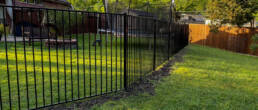
Choosing a fence material is one of the first big decisions in any fencing project, and for many Fort Worth homeowners it comes down to two favorites: wood and wrought iron. Both have a long track record in North Texas, but they serve different priorities. Here is how the two compare, so you can figure out which one fits your yard, your budget, and the way you actually use your outdoor space.
We work with homeowners across Fort Worth on both materials, and the right answer usually depends less on which fence looks better in photos and more on what you need the fence to do. A fence that photographs beautifully but does not solve your actual privacy or security needs will not feel like a win a year down the road, so it helps to start with priorities rather than aesthetics alone.
Wood Fencing: Strengths and Considerations
Wood remains one of the most popular fencing choices for a reason. It offers full privacy when built as a solid panel fence, which makes it a strong option for backyards, pools, and any space where you want a real visual barrier from neighbors or the street. Wood also brings a warm, natural look that pairs well with a wide range of home styles, from traditional to more modern designs.
Wood also tends to feel more approachable for households with children or pets, since a solid panel fence removes sightlines entirely rather than just marking a boundary, which many parents and pet owners find gives them extra peace of mind in the backyard.
On the maintenance side, wood does require more attention than metal fencing. Staining every couple of years protects the wood from sun and moisture damage and keeps the color looking fresh. Without that upkeep, wood can gray, warp, or splinter over time, especially in a climate that swings between intense summer heat and heavier spring rain. Cost-wise, wood is often a more budget-friendly option upfront compared to wrought iron, which makes it appealing for homeowners fencing a larger yard or working within a defined budget.
Wood also offers flexibility in style. Board-on-board designs add extra privacy and a more finished look on both sides of the fence, while a standard panel style is a simpler, more economical option. Height and picket spacing can be adjusted to fit local guidelines or personal preference, and a wood fence can be stained in a range of tones to match the rest of the home’s exterior. That flexibility is part of why wood remains such a common choice across Fort Worth neighborhoods with a wide mix of home styles.
Wrought Iron Fencing: Strengths and Considerations
Wrought iron takes a different approach. Rather than blocking the view, it defines a boundary while keeping sightlines open, which many homeowners like for front yards or areas where they want security without feeling closed in. It also has a more formal, decorative look that can add a strong architectural statement to a property, particularly on homes with a more traditional or upscale exterior.
Durability is one of wrought iron’s biggest strengths. It holds up well against wind, does not warp or rot, and does not need staining, which makes long-term maintenance simpler than wood. Occasional cleaning and a check for rust or loose hardware are usually all it takes to keep it in good shape. Many homeowners appreciate that a quick rinse and an annual inspection is essentially the entire maintenance routine, compared to the more involved staining schedule wood requires.
The tradeoff is privacy. Because wrought iron is open by design, it is not the right choice if your main goal is blocking a direct view into your yard, and upfront costs tend to run higher than a comparable wood fence.
Wrought iron also tends to hold its value well over time. Because it does not require refinishing the way wood does, homeowners who install it often find that it still looks close to new many years later with only basic upkeep. This makes it a popular choice for homeowners who want a long-term fencing solution and are comfortable trading some privacy for durability and a more open, polished appearance.
Comparing Cost, Maintenance, and Lifespan
When homeowners ask us to boil the decision down, it usually comes to a handful of core factors rather than a single deciding one:
- Upfront cost: Wood is generally the more budget-friendly option, while wrought iron tends to cost more due to materials and labor.
- Ongoing maintenance: Wood needs periodic staining and occasional board repair, while wrought iron mainly needs cleaning and rust checks.
- Lifespan: With consistent maintenance, both materials can last for many years, though wrought iron often requires less intervention to get there.
- Privacy: Wood offers a solid visual barrier, while wrought iron offers security with an open sightline.
Neither material is objectively better than the other. The right choice depends on which of these factors matters most for your property and your household’s priorities.
It also helps to think beyond the fence line itself and consider gates, since both materials pair with automatic or manual gate systems in different ways. A wood fence typically pairs with a matching wood gate for a seamless look, while wrought iron fencing often pairs with an iron gate that keeps the open, decorative feel consistent across the entire perimeter.
Weather resilience is worth a mention too, since North Texas sees its share of high winds and severe spring storms. A well-installed wood fence with properly set posts can hold up to strong wind, though a solid panel design does catch more wind resistance than an open style. Wrought iron’s open design lets wind pass through more easily, which is part of why it tends to fare well through storm season with minimal damage, though very old or poorly maintained iron can rust at the joints if it is not checked periodically.
Which Fence Fits Your Fort Worth Property?
 A few practical questions can help point you toward the right material:
- Do you need full privacy from neighbors or a busy street, or is an open, visible boundary acceptable?
- How much time and budget do you want to spend on ongoing maintenance?
- Are you fencing a backyard, a front yard, or the full perimeter of the property?
- Does your neighborhood have any guidelines about fence height, material, or appearance?
- Do you have pets that need a solid barrier rather than an open design?
Homeowners with pool areas, tight-knit backyards, or households with dogs often lean toward wood for its privacy and containment. Homeowners focused on curb appeal, front yard boundaries, or a more decorative look often lean toward wrought iron.
Budget flexibility also plays into the decision more than homeowners sometimes expect going in. Rather than treating it as an all-or-nothing choice, it can help to price out a smaller pilot section, such as the front yard alone, before committing to a full-perimeter installation of either material.
If you are still torn, walking your property with our team is one of the fastest ways to see how each material would actually look and function on your specific lot.
Lot shape and layout matter here too. A property with a large backyard and limited street visibility may not need the same level of privacy as a home on a corner lot or along a busier road. Fort Worth’s mix of established neighborhoods and newer developments means lot sizes and layouts vary quite a bit block to block, so what works well for a neighbor’s property is not always the best fit for yours.
Can You Combine Both Materials?
You do not have to choose just one. Many Fort Worth homeowners use wood for backyard privacy sections and wrought iron for the front yard or a decorative entry point, which gets the benefit of both materials where they matter most. A common approach is a solid wood fence around the back and sides of the property paired with an open wrought iron section, and sometimes a matching gate, along the front.
This kind of mixed approach also opens up options for driveway or walk gates, since a wrought iron gate can serve as an elegant transition point even if the rest of the fence is wood. We help homeowners plan these combinations from the start, so the different materials feel intentional rather than mismatched.
Combining materials also gives homeowners room to phase a project over time. Some start with a privacy fence around the backyard and add a decorative wrought iron section along the front at a later date, once budget allows. Planning the layout with both phases in mind from the beginning helps ensure the finished product looks cohesive, rather than like two unrelated projects stitched together.
Quick Comparison Recap
If you are still deciding, here is the short version:
- Choose wood if privacy, a warmer look, and a lower upfront cost matter most to you
- Choose wrought iron if durability, low maintenance, and an open, decorative look matter most
- Consider a combination if you want privacy in some areas and a decorative, open feel in others
There is no universally right answer, only the one that fits your property, your budget, and how your household actually lives in the space. If you find yourself weighing the pros of both lists equally, that is often a sign a combination approach is worth exploring rather than forcing a single material across the entire property.
Let’s Help You Decide for Your Fort Worth Yard
Our team is family-owned, bilingual, and on-site throughout every project, so you get clear communication from the first estimate to the final walkthrough. Whether you are leaning toward a wood fence, wrought iron fence, or a mix of both, we are happy to walk your Fort Worth property with you and talk through what makes the most sense. Once your new fence is in place, our guide to fence staining is a helpful next read if you go the wood route.
We will talk through your priorities, walk the property with you, and put together options that fit both your budget and the way you actually use your yard. Request an appointment with our team today, and we will help you choose the material that fits your home and keep the project moving from design to completion.
Ready for an expert opinion? Get in touch today!
Lorem ipsum dolor sit amet, consectetur adipiscing elit, sed do eiusmod tempor incididunt ut labore et dolore magna aliqua. Pharetra et ultrices neque ornare aenean euismod elementum nisi. Mauris augue neque gravida in fermentum.
Like this article? Spread the word!
Related Posts
Balance De Terra’s Guide to Fence Staining for Mesquite Homeowners
Balance De Terra's guide to fence staining for Mesquite homeowners. Learn when to…

Do Automatic Driveway Gates Make Sense for Your Rockwall Home?
Considering an automatic driveway gate in Rockwall, TX? See what to know about security,…

Wooden Gate Design Ideas for DFW Homes
Explore wooden gate design ideas for DFW homes, from board-on-board to arched garden…