

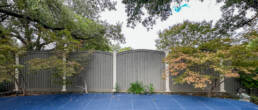
A concrete driveway is one of the most functional investments you can make in your Fort Worth home, but keeping it in good shape takes more than a single pour and a few years of everyday use. Between the region’s heavy clay soil, intense summer heat, and occasional freeze events, driveways in Fort Worth face a distinct set of challenges that can shorten their lifespan if they are not properly maintained.
At Balance De Terra, we build and support concrete driveways for homeowners throughout Fort Worth and the greater Dallas-Fort Worth area. This guide walks through the seasonal care, early warning signs, and simple habits that help your driveway stay strong, level, and crack-free for years to come, whether it was poured last year or a decade ago.
Why Fort Worth Driveways Need Special Care
 Fort Worth sits on a foundation of expansive clay soil, and that soil behaves very differently than sand or rock. When rain soaks into the ground, clay swells and pushes upward. When the weather turns hot and dry, that same soil shrinks and pulls away from whatever is sitting on top of it. A concrete driveway rests directly on that shifting base, so every wet spring and dry summer puts stress on the slab underneath, even when the concrete itself is in good condition.
Add in Texas heat, which causes concrete to expand during the day and contract at night, along with the occasional hard freeze in winter, and it is easy to see why driveways here age differently than they would in a more stable climate. Homeowners who move to Fort Worth from other parts of the country are often surprised at how much local soil and weather patterns affect something as simple as a driveway. What holds up for decades in one region can develop stress cracks within just a few years here if it was not built with the local ground conditions in mind.
None of this means a driveway is doomed to crack. It simply means that properly installed concrete, with the right base preparation, reinforcement, and control joints, paired with a bit of regular care, holds up far better against these conditions than a slab that is left alone for years at a time. The goal is not to eliminate every hairline crack, since some minor surface cracking is normal even in well-built concrete. The goal is to catch and manage the signs that point to a bigger, more costly issue underneath.
Understanding what your driveway is up against is the first step toward keeping it in good condition. The habits and inspection points below are built specifically around what Fort Worth homeowners deal with each year, not generic advice pulled from a climate that behaves nothing like North Texas.
Signs Your Driveway Needs Attention
Most concrete problems start small and get more expensive the longer they are ignored. Keep an eye out for these early warning signs:
- Hairline cracks that are widening or spreading in new directions
- Water that pools in the same spot after every rain instead of draining away
- Sections of the driveway that feel uneven or noticeably higher or lower than the rest
- Crumbling or flaking at the edges or corners of the slab
- Gaps opening up at the expansion joints where sections of concrete meet
- Small chips or pitting on the surface that keep multiplying
Catching these signs early usually means a simple repair rather than a full replacement. If several of these issues show up at once, or if a crack is wide enough to catch a coin on its edge, it is worth having a professional take a closer look before the damage spreads further into the slab. It is also worth walking the full length of your driveway a few times a year rather than only glancing at it from the front porch. Many early problems start near the edges or at the point where the driveway meets the garage slab, and those spots are easy to miss during a quick visual check from a distance.
Seasonal Maintenance Tips for a Longer-Lasting Driveway
Because Fort Worth experiences such a wide swing in temperature and moisture throughout the year, a bit of seasonal attention goes a long way toward protecting your investment. Breaking maintenance into smaller seasonal tasks also makes it far more manageable than trying to handle everything in one weekend each year.
Spring
Spring rains are heavier here, and that means more water moving through the clay soil under your driveway. Rinse away winter grime, check for new cracks that may have formed over the colder months, and confirm that gutters and downspouts are directing water away from the slab rather than toward it. This is also a good time to check expansion joints, since a full season of soil movement can widen gaps that were barely noticeable the previous fall.
Summer
High heat is when concrete expands the most and when existing cracks tend to widen. This is a good time to reseal the surface if it has been a few years since the last application, since a fresh sealer helps block moisture and UV damage during the hottest stretch of the year. Sealing also makes the surface easier to clean and helps prevent oil and grease stains from soaking in during the months when the driveway sees the most use.
Fall and Winter
As temperatures drop, clay soil begins to shrink again, which can create small gaps beneath the slab. Clear leaves and debris regularly so moisture does not sit against the concrete, and address any minor cracks before winter moisture has a chance to work its way in and expand them further. On the rare occasion Fort Worth sees a hard freeze, avoid using rock salt on the surface, since it can accelerate surface damage over time.
Everyday Habits That Protect Your Concrete
Beyond seasonal care, a few ongoing habits make a real difference in how long your driveway lasts. Most of these do not require any special tools or expertise, just a bit of consistency throughout the year:
- Skip rock salt and heavy de-icing chemicals, which can eat away at the surface over time
- Be mindful of parking heavy trucks, trailers, or equipment on the driveway for extended periods
- Keep tree roots at a safe distance, since roots can push against and lift sections of concrete as they grow
- Grade the surrounding landscape so rainwater flows away from the slab instead of collecting against it
- Sweep and rinse the surface regularly to prevent dirt, oil, and organic buildup from staining or weakening the concrete
Tree roots deserve special attention if your property has mature trees near the driveway. Roots naturally seek out moisture, and a driveway can create a shaded, slightly damp environment that draws them in over time. If you are planning new landscaping near an existing driveway, choosing tree varieties with less aggressive root systems, or placing them farther from the slab, can prevent a costly problem years down the road.
Good drainage is one of the most overlooked factors in driveway longevity. Water that pools near or under a slab softens the clay soil beneath it, and softened soil is far more likely to shift and cause cracking or settling. If your property has areas where water consistently collects near the slab, a retaining wall or regraded landscape bed nearby can help redirect that water before it becomes a long-term problem. Even small changes, like adding a downspout extension or slightly regrading a planting bed along the edge of the driveway, can make a noticeable difference over time.
When to Repair vs. When to Replace
Not every crack means it is time for a new driveway. Hairline cracks, minor surface pitting, and small chips at the edges can usually be patched or sealed without disturbing the rest of the slab. These repairs are quick, affordable, and often blend in well once finished, especially when they are addressed before the crack has a chance to widen or take on water.
Replacement becomes the better option when cracks run all the way through the slab, when large sections have sunk or shifted due to soil movement underneath, or when repairs have already been made multiple times in the same area without holding. Age matters too. A driveway that is decades old and showing widespread wear across multiple slabs is often a better candidate for a full replacement than a patchwork of individual repairs. At that point, patching becomes a short-term fix for a problem that is happening below the surface, and a fresh pour with proper site preparation, including a compacted base and updated control joints, is usually the more cost-effective long-term solution.
A team that stays on-site throughout the project, like ours at Balance De Terra, can walk you through which option makes the most sense for your specific driveway and budget, and explain the reasoning in plain terms rather than jumping straight to the most expensive fix. You can learn more about how we approach every project on our about page.
Your Fort Worth Driveway Care Checklist
Between seasonal tasks and everyday habits, it helps to have a short list you can return to throughout the year. Use this quick checklist to stay ahead of driveway problems before they turn into bigger, more expensive repairs:
- Inspect for new or widening cracks each season
- Confirm water drains away from the slab after rain
- Reseal every two to three years, or sooner in high-traffic areas
- Clear debris, leaves, and stains on a regular basis
- Avoid de-icing salts and limit heavy vehicle weight when possible
- Address small cracks and chips before they spread
- Call a professional if you notice uneven settling or joint separation
Ready to Protect Your Fort Worth Driveway?
Whether your current driveway needs a repair, a resealing, or a full replacement built to handle North Texas soil and weather, our team is ready to help. We combine quality materials, hands-on supervision, and bilingual service to make the process straightforward from start to finish, so you always know what is happening and what comes next.
Every driveway on our schedule gets the same level of attention, whether it is a small repair or a full replacement, and a lead team member stays on-site throughout the project to keep things moving and answer any questions along the way.
Request an appointment today and let us help you keep your Fort Worth driveway in great shape for years to come.
Ready for an expert opinion? Get in touch today!
Lorem ipsum dolor sit amet, consectetur adipiscing elit, sed do eiusmod tempor incididunt ut labore et dolore magna aliqua. Pharetra et ultrices neque ornare aenean euismod elementum nisi. Mauris augue neque gravida in fermentum.
Like this article? Spread the word!
Related Posts
Wood Fence vs. Wrought Iron Fence: Which Is Right for Your Fort Worth Home?
Comparing wood and wrought iron fencing for your Fort Worth home? See the differences in…
Balance De Terra’s Guide to Fence Staining for Mesquite Homeowners
Balance De Terra's guide to fence staining for Mesquite homeowners. Learn when to…

Do Automatic Driveway Gates Make Sense for Your Rockwall Home?
Considering an automatic driveway gate in Rockwall, TX? See what to know about security,…